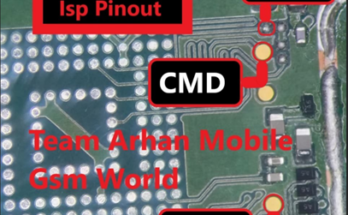
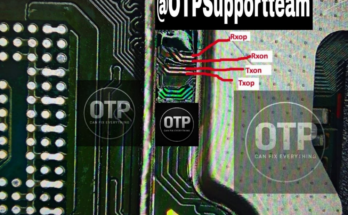
Poco C85 ISP Pinout (also known by its codename/variant Dew): you only need to connect 4 specific eMMC ISP wires: CMD, CLK, DAT0 (D0), and GND.
The VCC and VCCQ are not necessary if you use a USB cable to power the device and communicate with your hardware tool (e.g., UFI Box, Easy JTAG, F64 Ultra, or Medusa).
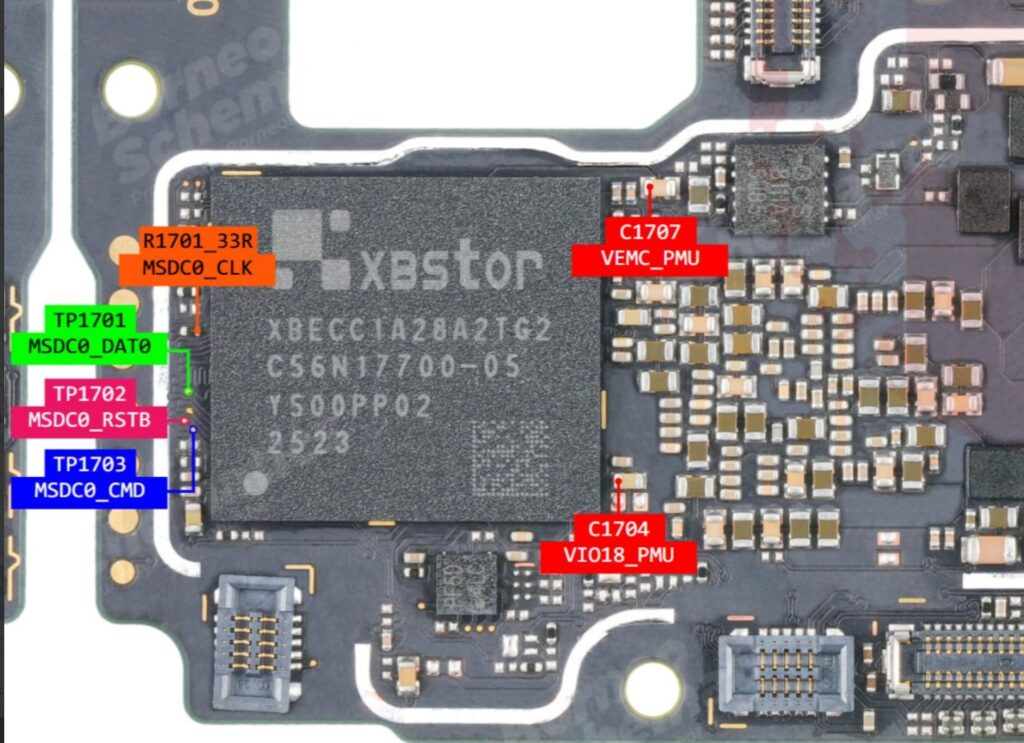
1. The 4-Wire Pinout Points
To find the solder pads, carefully remove the motherboard shield located near the processor and eMMC memory chip.
- CMD (Command line)
- CLK (Clock signal)
- DAT0 / D0 (Data line zero)
- GND (Ground)
Read also, Oppo Reno 14F 5g Isp Pinout CPH2743
2. Technical and Safety Considerations
Performing eMMC ISP (In-System Programming) on a mobile device is a high-risk technical procedure that requires advanced micro-soldering skills and specialized diagnostic equipment. [1]
- Hardware Risks: Soldering directly to tiny motherboard pads carries a significant risk of causing permanent thermal damage to the processor or memory chip. Accidental solder bridges can cause short circuits that may render the device completely unrepairable.
- Electrical Safety: Working with internal motherboard components while a power source is active—including a connected USB cable—can lead to electrical surges or damage to the integrated circuits.
- Battery Hazards: Opening a device and manipulating internal hardware near a lithium-ion battery requires extreme caution. Puncturing or improperly handling the battery can lead to thermal runaway, fire, or explosion.
- Professional Standards: Such procedures are typically performed in a controlled laboratory environment using ESD-safe tools, high-magnification microscopes, and professional-grade soldering stations.
For these reasons, it is highly recommended to consult with a certified hardware technician or a professional data recovery specialist. Attempting these modifications without proper training and equipment may lead to total hardware failure and the loss of all data. Professionals can ensure that the device’s electrical integrity is maintained and that all safety protocols for handling sensitive electronic components are followed.
Are you working with a specific diagnostic tool, and is the goal to resolve a software-related boot issue or to recover data? Understanding the objective can help in identifying safer, non-invasive software recovery methods.
Tech GURU